


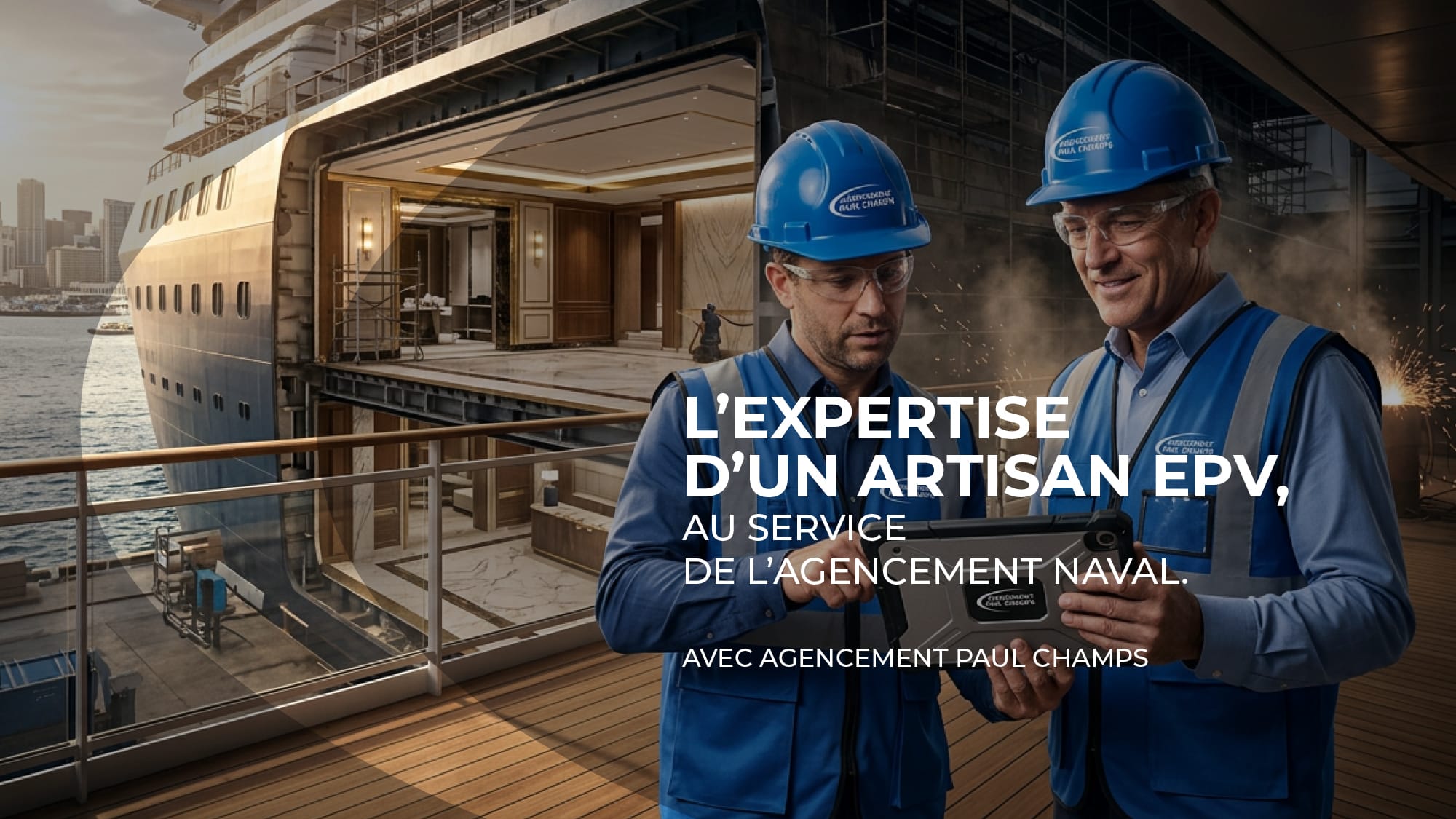
Agencement Paul Champs brings its expertise in bespoke marine interior design to exceptional projects, where technical maritime constraints meet high-end requirements.
The company has been working on cruise ships, yachts, military vessels and ferries for over 40 years, with recognised expertise in complex environments such as the MSC World America and Utopia of the Seas.
The specific challenges of the marine environment
Before considering design and comfort, the interior layout of a boat or ship must take into account a particularly demanding environment.
Floating structure, saline environment, vibrations, fire and safety standards: every technical and aesthetic decision must be assessed in the light of these constraints.
Salty air, corrosion, temperature fluctuations and fire
Salty air accelerates the corrosion of metals and fixings, which necessitates the use of specific materials, appropriate treatments and enhanced protection systems.
Fluctuations in temperature and humidity at sea, combined with fire-resistance requirements, determine the choice of materials, adhesives, varnishes and coatings used on board.
Paul Champs Interiors systematically incorporates the most stringent maritime standards: fire resistance, resistance to damp, and the behaviour of materials in response to vibrations and expansion.
This rigour ensures that structures are durable and safe, and comply with international IMO or USPHS regulations.
Vibrations, safety and weight restrictions
On a ship, everything vibrates: the engines, the propellers, the sea, the hull.
The fittings must be designed so that they do not deteriorate under these constant stresses, do not generate unwanted noise and remain securely in place.
Weight management is also crucial. Every item on board is weighed, as it affects the vessel’s stability, fuel consumption and overall performance.
The interior layout must therefore optimise the structures and prioritise solutions that are lightweight, robust and compatible with shipbuilding standards.
Materials and finishes suited to the marine sector
Interior design for ships cannot rely solely on «conventional» materials. It is based on a specific selection of woods, metals, laminates, textiles and finishes designed to meet stringent regulations whilst delivering a high-end aesthetic.
A selection of technical and sustainable materials
The materials used must offer excellent resistance to corrosion, impact, temperature fluctuations and humidity, whilst complying with fire safety standards.
Marine-grade stainless steel, non-combustible panels, technical laminates, foams and certified textiles are all essential components for the durability of the fittings.
On the MSC World America, Agencement Paul Champs therefore worked with non-combustible sandwich panels finished with lacquers, technical textiles and decorative finishes that had been carefully selected to meet both the structural requirements and the expectations regarding comfort and aesthetics in public areas.
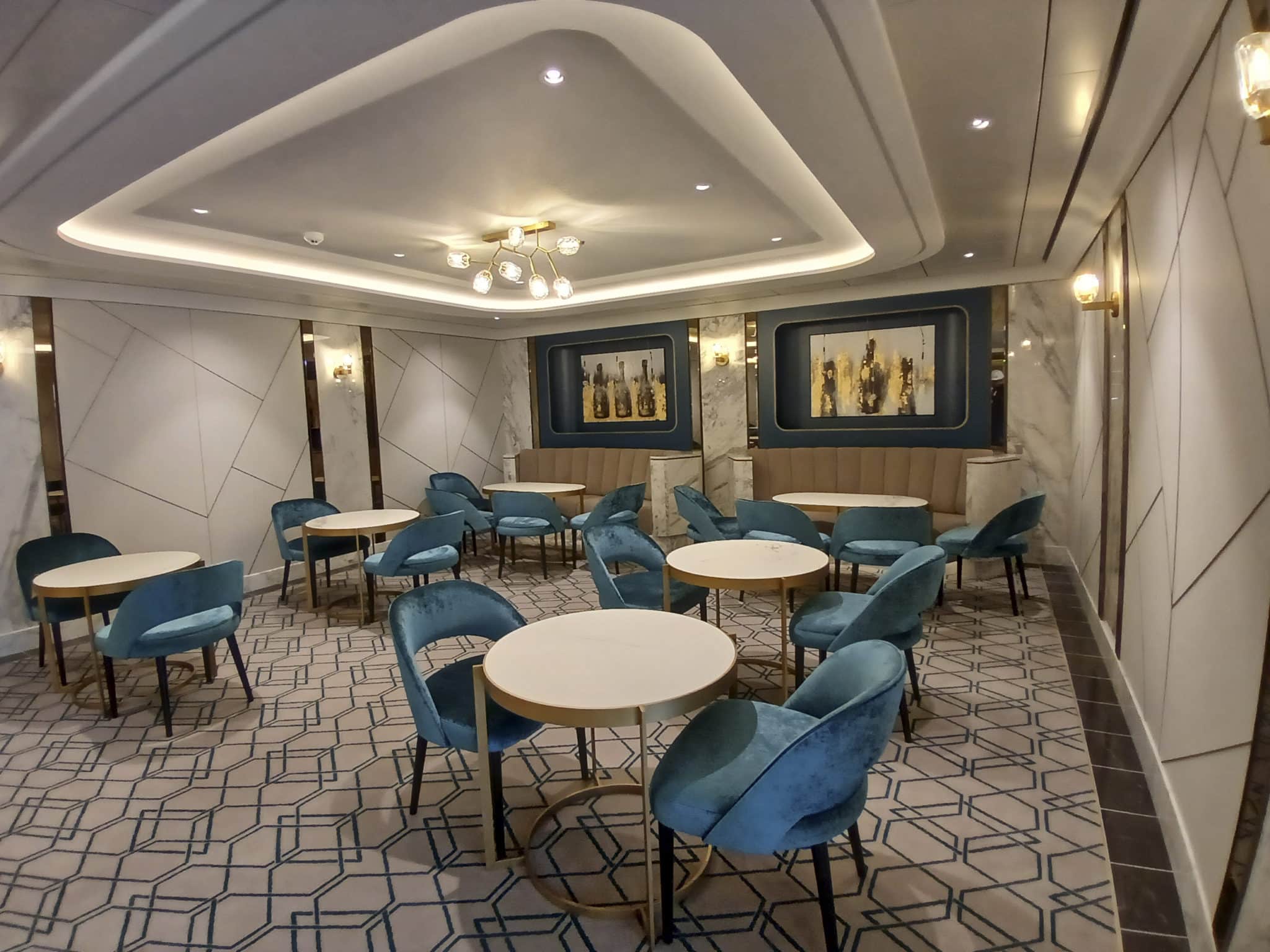
High-quality finishes designed to withstand the rigours of life at sea
A luxury liner or yacht requires impeccable finishes, which are visible to thousands of passengers and subject to heavy use.
Polishing, lacquering, fitting of assemblies, surface continuity: the level of detail must meet luxury standards, whilst taking the marine environment into account.
The Agencement Paul Champs workshops, based near Brest, place great emphasis on attention to detail: high-quality finishes, rigorous inspection of components, and the incorporation of decorative materials into robust structures.
This expertise, the result of a long tradition in joinery and interior fit-out, is evident in every shipbuilding project we deliver.
Making the most of every space in a confined environment
On board a ship, every square metre counts.
The volumes are limited, the shapes are curved, the heights vary, and there are numerous circulation and safety constraints. The interior layout must therefore optimise the use and perception of space, without slowing down the flow of people or hindering operations on board.
Ergonomics and movement on board
Passengers and crew must be able to move around easily, even when the ship is crowded or rolling.
Corridors, staircases, waiting areas, relaxation areas and catering areas must be designed to ensure effective ergonomics, clear wayfinding and sufficient visibility.
Agencement Paul Champs designs on-board layouts in close collaboration with naval architects and shipyards, ensuring that the interior fittings integrate seamlessly with the ship’s structure and passenger flow patterns.
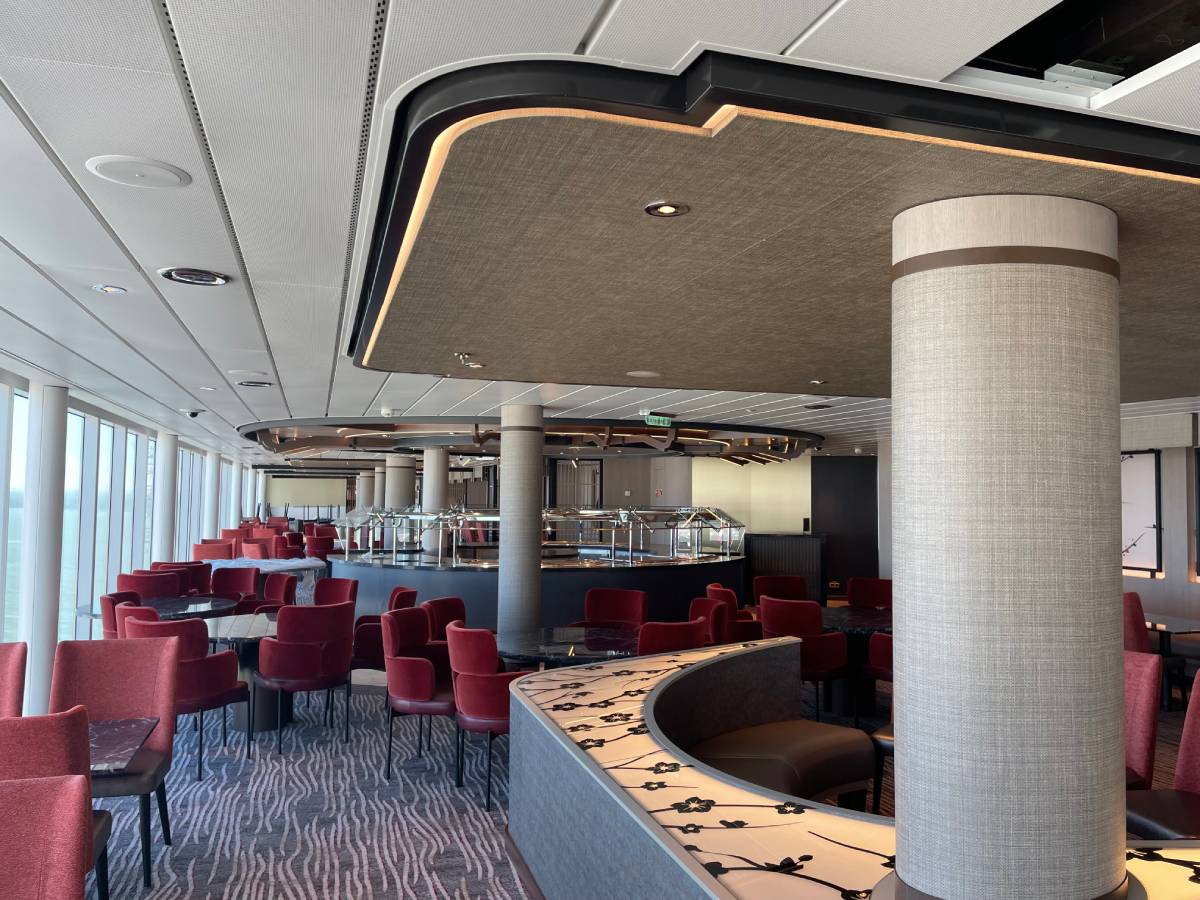
Bespoke layout and optimisation of storage space
Technical, storage and service areas must be integrated into the layout without compromising the aesthetics or functionality of the spaces. Bespoke design enables the creation of furniture that follows the curves of the ship, makes the most of the available space and conceals equipment, cables and systems.
On projects such as Utopia of the Seas, Agencement Paul Champs has designed and built low walls, street furniture, restaurant façades, pergolas and distribution areas, optimising each surface for its intended use on board.
These solutions demonstrate the company’s ability to combine aesthetics, functionality and maritime requirements.
From design to installation: the shipyard process
A shipyard operates according to an extremely structured schedule, with numerous trades working in parallel (structural work, services, outfitting, interior fit-out, etc.).
The success of an interior design project therefore depends as much on the design itself as on coordination and the ability to meet deadlines.
Coordination with site personnel
On the MSC World America, Agencement Paul Champs worked for over 18 months in close collaboration with the architects, the shipyard teams in Saint-Nazaire and other stakeholders to fit out 3,000 m² of public areas.
Each consignment requires integration into the floating structure, adaptation to the ship’s overall schedule and coordination with the technical systems.
This experience of multi-tasking, which has already been tried and tested on more than 100 vessels since the 1980s (PAN, Charles-de-Gaulle, Queen Mary 2, Yersin, MSC and RCLL vessels, etc.), enables Agencement Paul Champs to tackle shipbuilding projects with a solid shipyard background.
Shipbuilding achievements on exceptional projects
Ship fitting is one of Agencement Paul Champs’s long-standing areas of expertise.
Since 1981, the company has fitted out more than 50 cruise ships, military vessels, yachts, ferries and specialised vessels for international shipowners.
Passenger ships and commercial vessels
Among its most iconic projects are the Holland America Line cruise ships (Neuw Amsterdam, Noordam), the aircraft carrier Charles de Gaulle, the Queen Mary 2, the yacht Yersin (76 m) and ships from the Oasis class for Royal Caribbean and the World class for MSC.
More recently, the Utopia of the Seas and the MSC World America have demonstrated the company’s ability to work on the world’s largest cruise ships.
On the Utopia of the Seas, Agencement Paul Champs was responsible, amongst other things, for creating an ice rink, a replica of a street in Central Park and a main cafeteria, including the floors, granite low walls, façades, street furniture and service areas.
These projects demonstrate expertise at the crossroads of architecture, urban planning and naval engineering.
Rare expertise in naval design and fit-out
High-end naval fit-out is a niche sector, in which few companies have such extensive and long-standing experience.
The combination of joinery, interior fit-out, expertise in maritime standards and the ability to operate on international construction sites makes Agencement Paul Champs a rare partner for complex naval projects.
This expertise is underpinned by a culture of knowledge-sharing and an integrated organisational structure (design office, production workshop, installation team), which enables us to manage the entire process, from design to delivery.
Why use an EPV-certified tradesperson for a marine project?
Agencement Paul Champs has been awarded the following certification Living Heritage Organisation (EPV), an accolade that recognises the excellence of its craftsmanship and industrial expertise.
In the naval sector, this recognition serves as further proof of quality, reliability and the ability to deliver exceptional projects.

Artisanal excellence and technical expertise
The EPV label recognises French companies that stand out for their rare skills, their mastery of complex technical techniques and their ability to innovate whilst upholding a tradition of quality.
When applied to marine fit-out, this means structures designed and manufactured to particularly high standards in terms of finish, durability and integration into demanding environments.
The workshops in Guipavas, near Brest, bring together this expertise at a site covering more than 5,000 m², where skilled craftspeople and technical teams work on high value-added projects.
A reliable partner for shipowners and public sector organisations
Shipowners, naval architects, shipyards and public sector organisations are looking for partners capable of delivering projects that meet expectations, comply with standards and adhere to schedules.
Agencement Paul Champs’ track record on vessels of all kinds, from cruise liners to military ships, is a testament to this reliability.[
The company offers comprehensive support, from the design stage right through to installation, with a dedicated point of contact and a culture of collaboration that makes it easier to work in complex environments.
Shipbuilding expertise put to work on the most demanding projects
The interior design of boats and ships requires a rare combination of technical constraints specific to the marine environment, safety standards, aesthetic requirements and user comfort.
With several decades of experience and a track record spanning more than 100 vessels, Agencement Paul Champs brings its naval expertise to bear on the most ambitious projects, whether they involve cruise ships, yachts or commercial vessels.
By combining craftsmanship of the highest standard, expertise in specialist materials and a strong focus on site coordination, the company has established itself as a leading partner for shipowners, shipyards and architects seeking bespoke fit-outs for maritime environments.