


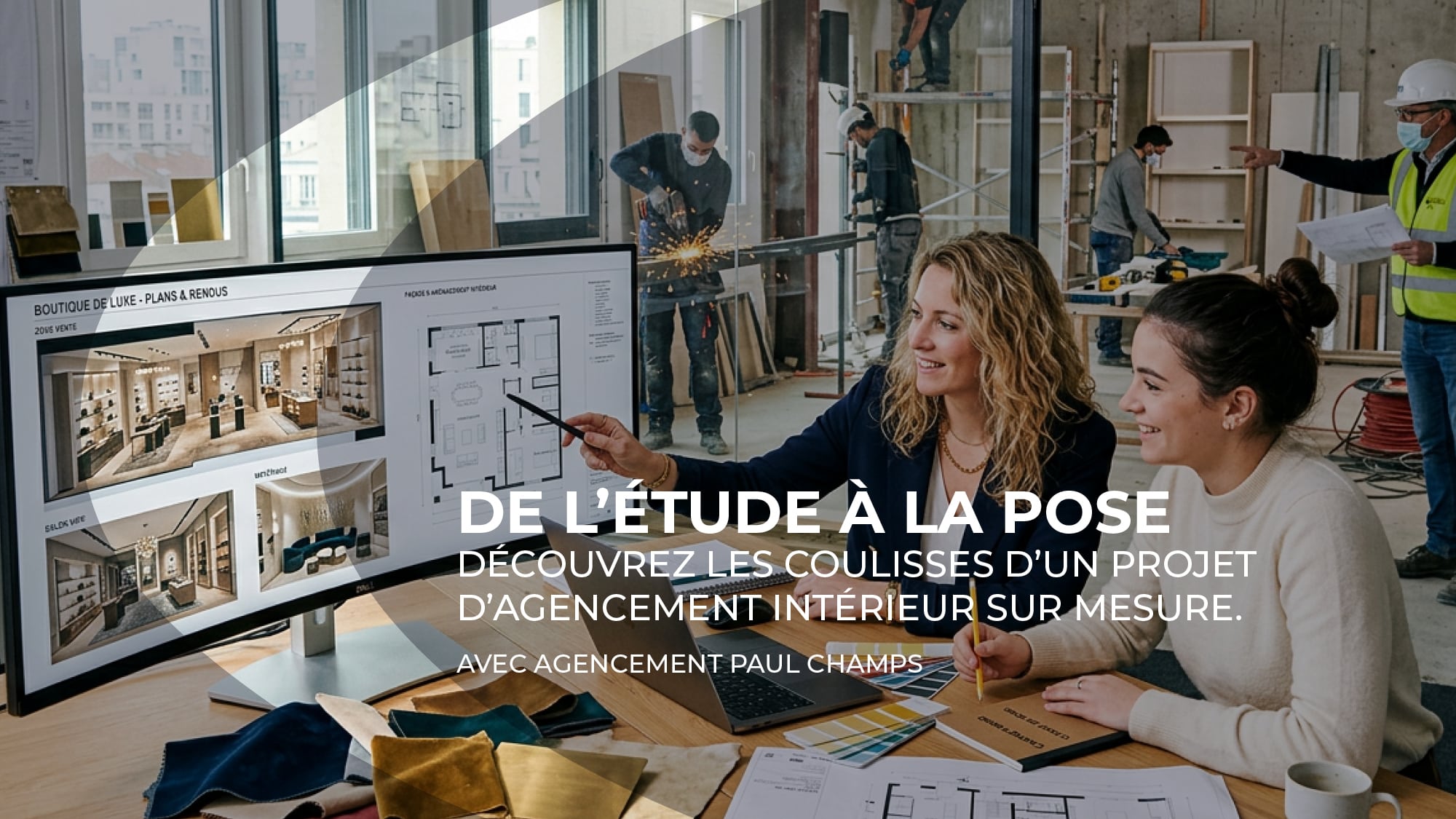
Preparing a bespoke interior design project requires a systematic approach, careful trade-offs and a clear vision of the desired outcome. From analysing how the space will be used, to managing the budget, selecting materials and coordinating the build, every stage is crucial to achieving a cohesive, functional and sustainable space.
At Agencement Paul Champs, our approach is based on a combination of design office work, in-house manufacturing and on-site installation, enabling us to support each client from design through to completion.
Preparing a bespoke interior design project requires a systematic approach, careful trade-offs and a clear vision of the desired outcome. From analysing how the space will be used, to managing the budget, selecting materials and coordinating the build, every stage is crucial to achieving a cohesive, functional and sustainable space.
At Agencement Paul Champs, our approach is based on a combination of design office work, in-house manufacturing and on-site installation, enabling us to support each client from design through to completion.
Defining your project: space, uses and constraints
Before launching a project, it is first necessary to specify what is to be transformed and for what purpose. Interior design is approached differently depending on whether it is for a retail outlet, a commercial premises, a public-facing establishment or an institutional venue. Technical constraints, circulation patterns, brand image and operational requirements must be identified from the outset.
This analysis phase also enables us to ask the right questions about the site’s dimensions, access points, utilities, standards and constraints. The more precise the brief, the more relevant and effective the project becomes. At Agencement Paul Champs, this initial analysis informs the work of the design team, enabling them to propose solutions that are truly tailored to the site’s requirements.
Set a realistic budget for a bespoke interior design project
The budget is a key component of the project, as it influences decisions regarding design, materials and the standard of finish. To avoid any unpleasant surprises, it is essential to set a realistic budget from the outset, taking into account not only the manufacture of the furniture, but also the design, installation, finishing touches and any on-site adjustments. A well-defined budget enables you to make the right trade-offs without compromising the final quality.
In a bespoke project, the cost depends largely on the degree of customisation, the complexity of the work and the technical constraints. The advantage of a manufacturer-fitter such as Agencement Paul Champs is precisely that it can offer a coherent solution spanning design and execution, with a holistic view of the project and optimised choices at every stage.
Standard furniture or made-to-measure: which should you choose?
Standard furniture may be suitable for simple, quick or very budget-conscious fit-outs. However, when it comes to optimising a space, accommodating specific constraints or enhancing a brand identity, bespoke manufacturing is often the best option. It allows you to make the most of every square metre, adapt functions to the layout and create a unique environment.
Agencement Paul Champs is fully committed to this bespoke approach, with recognised expertise in high-end interior design and bespoke joinery. Projects are designed to combine aesthetics, functionality and sustainability, taking into account the client’s needs and the specific characteristics of the site.

The planning phase: from the brief to the implementation plan
The design phase is at the heart of the preparation process. It transforms a stated requirement into a concrete, costed and technically feasible project. Based on the initial brief, the design team analyses the constraints, proposes solutions, draws up plans and coordinates the necessary adjustments before production begins.
At Agencement Paul Champs, this stage relies on constant communication between the design office, the project manager and the production teams. This continuity enables us to anticipate potential issues, validate technical details and ensure that the construction plan remains faithful to the original project.
In-house manufacturing: a guarantee of quality and precision
Workshop production offers a level of precision that is difficult to match on site. It allows for the assembly, finishing and fitting of components to be carried out in a controlled environment, using tools suited to complex projects. It is also an asset in ensuring consistency in workmanship, consistent quality and better management of deadlines.
The Agencement Paul Champs workshop covers 5,500 m² and is equipped with versatile manufacturing tools to handle technical and bespoke projects. The company fosters a culture of passing on skills, with ‘Compagnons du Devoir’ craftsmen and expertise that combines the tradition of cabinetmaking with modern processes. This commitment to precision ensures the high quality of the finished pieces.

Installation and handover of the project
On-site installation is the stage at which the project truly comes to life. It requires coordination, precision and the ability to adapt, as every site has its own constraints in terms of access, scheduling and working alongside other trades. At Agencement Paul Champs, delivery and installation are carried out by a team of qualified fitters, under the supervision of a site manager or project manager.
The handover of the project provides an opportunity to check that the whole project complies with specifications, that the finishes are of a high standard, and that the project adheres to the plans approved at an earlier stage. This stage is essential to ensure that the finished fit-out meets the client’s expectations, both in terms of aesthetics and functionality.
Questions to ask your interior designer before signing the contract
Before approving a project, it is worth asking your fit-out contractor a few key questions. What level of support do they provide, from the brief right through to installation? Do they have an in-house design department? Do they manufacture the fittings themselves? How do they organise site supervision and the coordination of contractors? These answers give a good idea of how reliable the partner is.
It is also important to consider their experience on similar projects, their ability to meet deadlines and the quality of communication between teams. Agencement Paul Champs provides a dedicated point of contact throughout the project, which facilitates communication, ensures the work progresses smoothly and enhances the consistency of the final result.
Why choose a manufacturer and fitter for your bespoke interior design project?
Choosing a manufacturer-installer means ensuring continuity between design, manufacture and installation. This approach minimises the loss of information, improves technical expertise and allows solutions to be tailored more precisely to the realities of the site. For a bespoke interior design project, this approach is often the most effective way to achieve a coherent and long-lasting result.
Agencement Paul Champs brings together precisely these skills through its design office, production workshop and installation teams. Since 1936, the company has cultivated a culture of bespoke design based on listening to clients, service excellence and customer satisfaction. It is this three-pronged approach that makes all the difference when it comes to transforming a space into a unique interior design, managed from start to finish.