


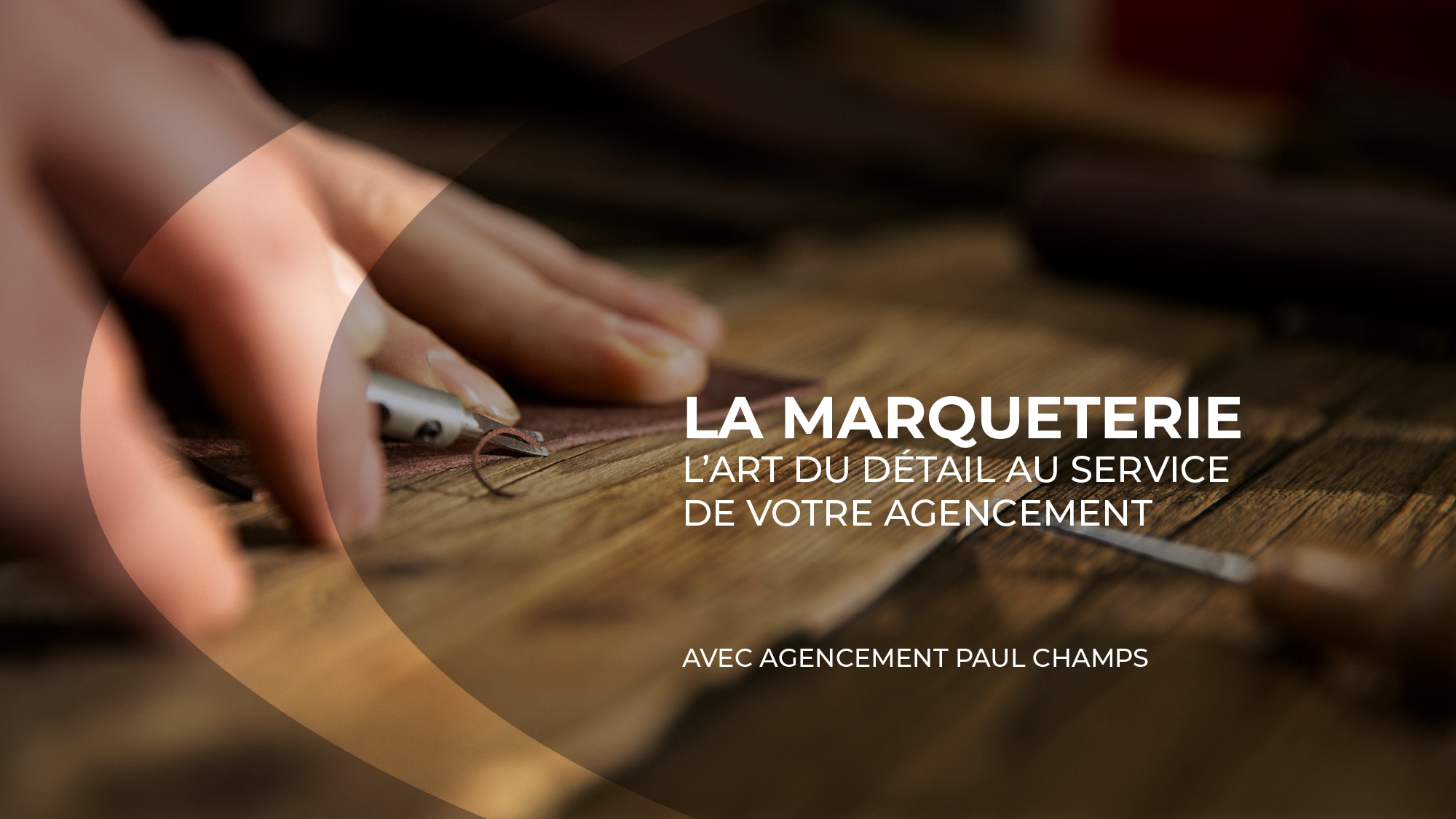
Marquetry is one of the finest crafts in cabinetmaking and interior design. It involves creating a decorative design by assembling, like a jigsaw puzzle, thin sheets of material (wood veneers, mother-of-pearl, brass, stainless steel) glued onto a backing.
At Agencement Paul Champs, this time-honoured technique is used in bespoke interior design projects, where each room becomes a unique work of art, combining aesthetics, functionality and durability.
Definition and origins of marquetry
Marquetry has its roots in 17th-century French cabinetmaking, notably in the work of André-Charles Boulle, Louis XIV’s cabinetmaker, who developed ‘Boulle marquetry’ – a technique involving the cutting of precious materials such as brass, mother-of-pearl, tortoiseshell and assembling them with rare varieties of wood.
Today, marquetry is recognised as an artistic craft by the National Institute of Artistic Crafts (INMA), a leading organisation operating under the supervision of the Ministries of the Economy and Culture.
An ancient art of woodworking
Carrying on the great tradition of French cabinetmaking, marquetry artists embellish ceremonial furniture, wood panelling and interior fittings by creating intricate designs, whether figurative or abstract.
Each type of wood brings its own nuances and textures: ebony, walnut and maple, as well as materials such as mother-of-pearl, shagreen and precious metals, all contribute to rich and harmonious designs.
Techniques and materials used in marquetry
Marquetry relies on a careful selection of materials and precise technical skill.
At Agencement Paul Champs, the teams work with fine woods (oak, walnut, maple, ebony, mahogany), as well as complementary materials such as mother-of-pearl, brass, stainless steel and shagreen.
Precious woods, mother-of-pearl, precious metals
Each type of wood is selected for its colour, grain and suitability for being cut into thin sheets of veneer.
Precious materials such as mother-of-pearl and brass create striking contrasts and textural effects that enhance the décor.
Parts can be cut by hand, using traditional techniques, or with modern tools such as laser cutting or waterjet cutting, which offer exceptional precision.
Once the pieces have been cut out, they are assembled like a jigsaw puzzle and then glued onto a backing.
The craftsmen then sand the piece and apply finishes such as varnish or oil, which bring out the natural beauty of the wood and protect the piece over time.
Why marquetry enhances high-end interior design
Marquetry is not just a decorative technique: it is a way of personalising a space, telling a story and creating a unique atmosphere.
In high-end interior design, it transforms an ordinary space into something truly exceptional, where every detail counts.
Customisation and one-off pieces
Marquetry enables the creation of bespoke designs, tailored to the client’s identity, the architecture of the venue and the intended use of the space.
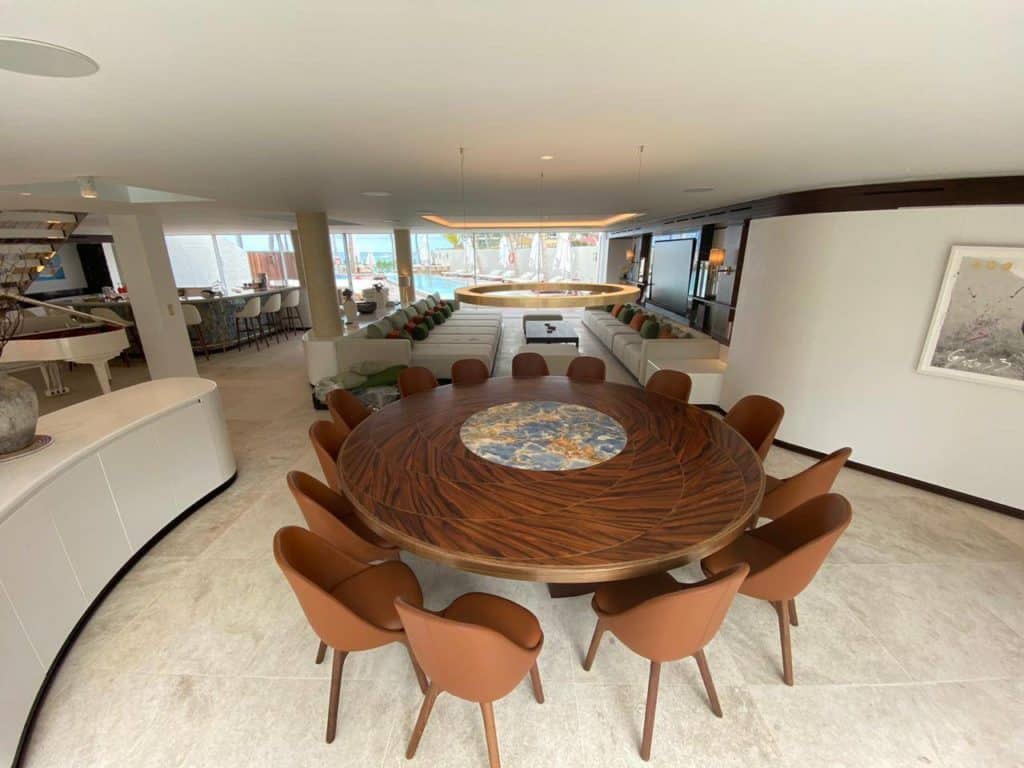
Wall panels, doors, headboards, tables, wooden floors and shop fittings can all be adorned with marquetry, offering endless possibilities for personalisation.
In prestigious private residences, luxury hotels, high-end boutiques and exceptional commercial premises, marquetry conveys a sense of quality, craftsmanship and exclusivity.
Marquetry at Agencement Paul Champs: craftsmanship with EPV certification
Agencement Paul Champs has been applying its expertise in marquetry to interior design and shipfitting projects for over 85 years.
The company, which has held the ‘Entreprise du Patrimoine Vivant’ (EPV) accreditation since 2011, combines tradition and modernity to create unique marquetry pieces that enhance any type of interior.
Technical expertise and training for craftspeople
The Agencement Paul Champs workshop covers more than 5,500 m² and is home to cabinetmakers and joiners, some of whom are members of the Compagnons du Devoir, ensuring a high standard of recognised craftsmanship.
Their involvement helps to ensure high standards are maintained throughout every project, from cutting to assembly, including the finishing touches.
The company also trains apprentices, ensuring that the skills and techniques of marquetry are passed on to future generations.
This combination of traditional craftsmanship and modern technologies (laser cutting, waterjet cutting, digital design tools) enables us to meet the highest standards in terms of quality, aesthetics and durability.
Production lead times and project monitoring
The time taken to produce a marquetry piece depends on the complexity of the design, its dimensions and the materials used.
On average, a bespoke marquetry project takes several weeks to complete, including the design, selection of materials, cutting, assembly and finishing.
For the Agencement Paul Champs team, every project receives personalised support, from the design office right through to on-site installation.
Customers benefit from a quality guarantee and support throughout the project, with the opportunity to visit the workshop and monitor the progress of their order.
Marquetry is much more than just a decorative technique: it is an ancient art form that enables the creation of unique spaces, where every detail is carefully considered to bring out the best in the wood and tell a story.
Agencement Paul Champs utilises marquetry in high-end interior design projects, combining traditional craftsmanship, technological innovation and the highest standards of quality.